
Keep emergency vehicles close to service
Strategically placed onsite fuel points reduce routine reliance on public stations and can support more resilient planning when supply conditions or call volumes are unusual.
Industry solution
Support round-the-clock fleet readiness with controlled refuelling for emergency vehicles, response fleets, specialist appliances and operational support equipment. Fueltek can provide fast authorised access with clear vehicle, user and site transaction records.
Emergency-service fuel systems need to combine accountability with a practical process for urgent operations. The design should reflect station coverage, fleet movements, shift patterns, stock resilience and the requirement to refuel without unnecessary delay.
Understanding the operation
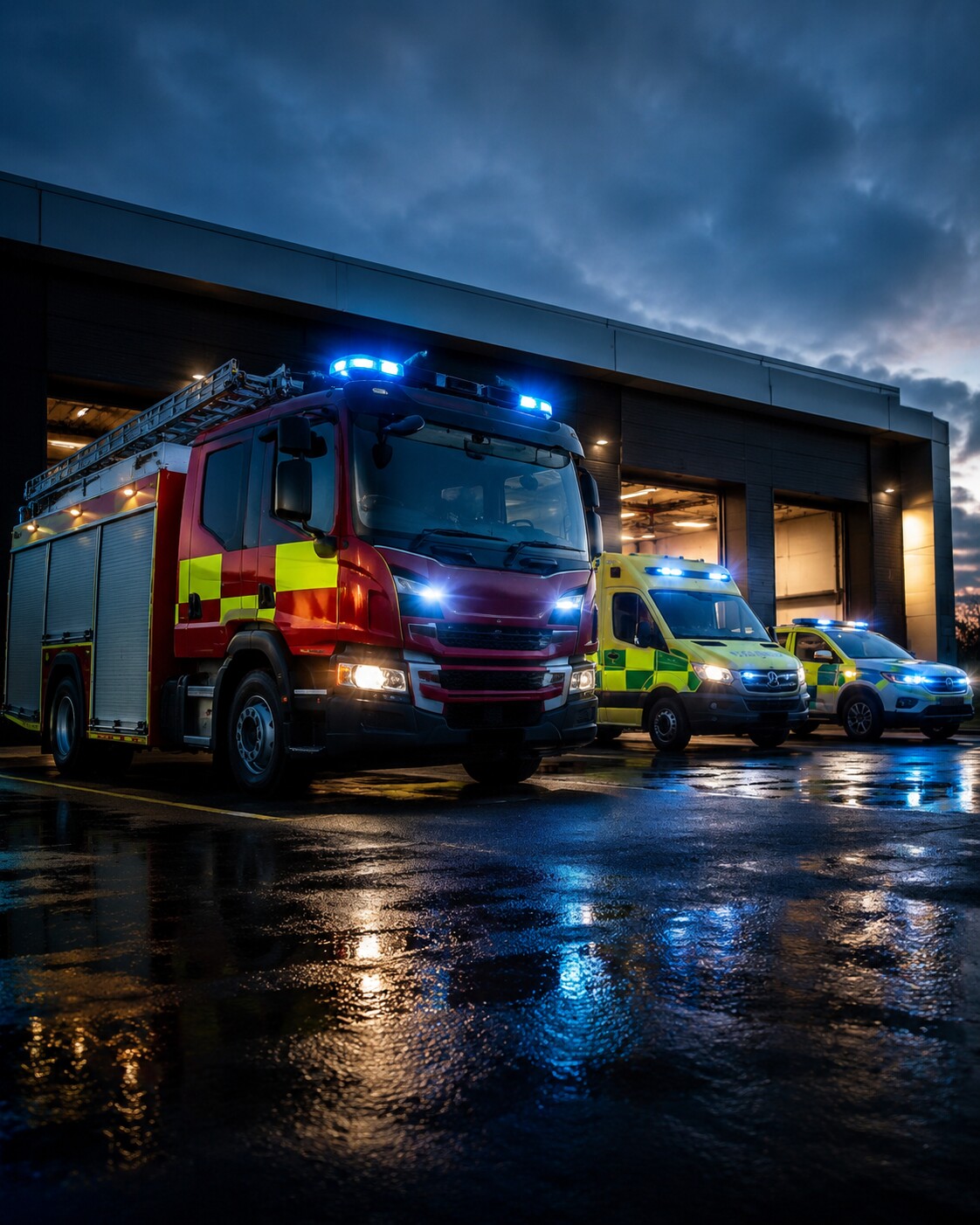
Fire, ambulance, police and other response organisations may operate mixed fleets across many stations or depots. Vehicles can move between locations, authorised users change by shift and some sites may have limited local administration.
A consistent Fueltek process can help each location record fuel in the same way while still applying the correct local access rules. Central reporting and tank information can then support operational review, stock planning and investigation of exceptional use.
Benefits for emergency fleets
Fire, rescue and other emergency-service fleets need fuel availability, clear accountability and dependable support across normal shifts and exceptional demand. A complete onsite system can combine strategic storage, authorised dispensing, tank monitoring and central records so operational teams can plan with better information.
Strategically placed onsite fuel points reduce routine reliance on public stations and can support more resilient planning when supply conditions or call volumes are unusual.
User, vehicle, site, time, product and quantity records support internal governance, departmental allocation and investigation without adding paper-based administration.
Permissions and reporting can be structured around brigades, stations, vehicle groups and shared infrastructure while retaining the location and responsibility for each transaction.
Tank monitoring adds visibility of current stock, available capacity, deliveries and selected alarm conditions, helping responsible teams plan replenishment and respond to exceptions.
Typical operational problems
Refuelling may occur at any time and sometimes under operational pressure. The identification process must be clear, reliable and familiar to authorised crews.
Different locations can develop different keys, logs and naming conventions. This makes central review difficult and can hide gaps in records.
The system should help deter casual or unauthorised dispensing without creating an impractical sequence for emergency-service personnel.
Managers need to understand site consumption and remaining fuel so deliveries and contingency arrangements can be planned before a shortage affects fleet availability.
Day-to-day workflow
A crew member or approved operative identifies themselves at the station or depot fuel point.
The appliance, ambulance, support vehicle or other asset is selected using the configured method.
The approved product is dispensed and the transaction is recorded with minimal unnecessary interaction.
Authorised teams can review site, vehicle, user and stock information for routine management and exception investigation.
Relevant capabilities
Provide individual or role-based credentials and a straightforward refuelling sequence for approved personnel.
Specify terminals and dispensers around the site environment, expected usage and fleet requirements.
Use common vehicle, station and user structures across connected locations to improve service-wide visibility.
Monitor suitable tanks remotely and combine level information with transaction trends to support replenishment planning.
Operational value
Fueltek project evidence
Fueltek’s published fire-and-rescue projects cover both multi-service shared infrastructure and a first-time deployment across strategic rural locations. Together they show why training, data ownership and operational continuity are as important as the equipment.
The programme covered fifteen sites and required a controlled approach to shared use, reporting and charging.
Norfolk’s first fuel-management deployment was built around resilience, coverage, user understanding and ongoing support.
Emergency-fleet projects require a documented continuity plan for installation, commissioning, communications failure, local operating procedures and support escalation.
Implementation approach
A successful installation starts with the real users, assets, peak periods and reporting responsibilities—not only the tank and pump.
Suitable Fueltek pages
Helpful answers
Yes, where user and vehicle permissions are configured across connected sites. The organisation should define which vehicles, personnel and products are permitted at each location.
The process can be designed to capture the required information with minimal steps. Reviewing the real operational workflow is essential so security does not become an avoidable delay.
Tankwatch can provide remote level information for suitable installations. It should be considered alongside delivery planning and local contingency procedures.
Yes. Appliances, ambulances, response cars, vans and support equipment can be represented as separate asset groups within the reporting structure.
They may be retained if compatible, serviceable and suitable for controlled metering. A technical review is required before integration is confirmed.
Fueltek offers support and maintenance services. The appropriate level of cover, response process and equipment scope should be agreed for the installation.